
Published 23 April 20266 min read
Callum Houston
Chief Commercial Officer
How Helm helps beauty and cosmetics brands build a fulfilment operation that matches the standard of their product from goods-in to the doorstep.
Who We Are and Why We Know Beauty Fulfilment
Helm WMS is a UK-based warehouse management and shipping platform that sits inside the operations of some of the largest eCommerce brands and third-party logistics providers, giving them real-time control over every aspect of warehouse and order management.
We have been working with beauty and cosmetics brands since 2017. That track record spans fast-growing DTC startups running their first warehouse through to established multi-channel retailers processing thousands of orders a day. We understand the operational pressures specific to beauty: high SKU counts, visually similar variants, batch and expiry requirements, gifting complexity, and the expectation that the post-purchase experience should be as polished as the product itself.
Our experience sits across the full spectrum of beauty fulfilment, brands running Helm directly in their own warehouses, and third-party fulfilment partners using Helm to run operations on behalf of beauty clients. That dual perspective means we have seen every flavour of the challenges the sector faces, and built solutions specifically to address them.
We don't just build WMS software. We build it for brands where product integrity, presentation, and post-purchase experience are commercial priorities. Beauty is at the top of that list.
Beauty Brands We Work With
The brands we work with came to us at different stages of growth and with different problems. Some were drowning in mispicks. Some were dependent on a single person to keep fulfilment moving. Some were scaling fast on social media and their warehouse simply could not keep up. What they share is that their products and their customers deserve better than a broken fulfilment process. Here is a look at their stories.
P. Louise
P. Louise is one of the UK's most recognised independent cosmetics brands, with a loyal community and a product range that moves at pace. As order volumes grew, the cracks in their existing operation became impossible to ignore. Inefficient picking routes meant staff were covering unnecessary ground on every shift. Without a structured system, pickers relied on memory, which drove a mispick rate of nearly one in six orders. Each error triggered a chain of costs: returns handling, reshipping, customer service time, and reputational damage.
Beyond picking, their legacy system's label process was adding further friction. Labels were bulk-printed each morning, meaning any change to an order after print resulted in wasted labels, mislabelling, and manual reprints that slowed throughput.
Helm introduced priority-based digital picking routes that guided staff through the most efficient path through the warehouse, with barcode scanning enforcing accuracy at every pick. Shipping rules were automated to remove manual carrier selection. Real-time label generation replaced bulk printing entirely: labels are now created at the point of packing, after verification, every time. The result was a 50% reduction in picking time, a dramatic improvement in order accuracy, and a fulfilment operation capable of scaling without a proportional increase in headcount.
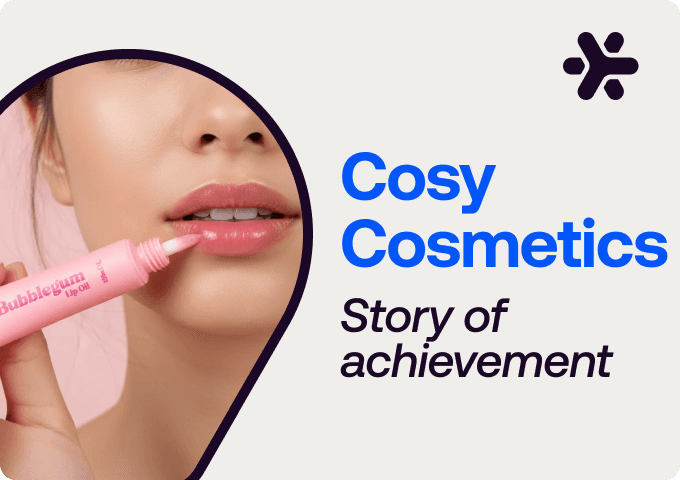
Cosy Cosmetics
Cosy Cosmetics is a young brand that reached 5,000 to 6,000 monthly orders within its first year, a remarkable pace of growth, but one that exposed a fundamental vulnerability in their fulfilment model. Their entire picking process depended on the founder. Labels were bulk-printed each morning, the founder personally picked every order, and staff packed whatever had been selected. Accuracy held up only because the founder was physically present for every order. That was not sustainable and it was not scalable.
Helm restructured their fulfilment flow entirely. A pick wall workflow suited to Cosy's compact, small-item product range guided staff through each order with on-screen product images, exact locations, and mandatory barcode scanning. Incorrect items cannot be processed. Labels print automatically after verification. New staff can be fully operational within minutes, with no risk of mispicks and no need for founder oversight. Marketplace integrations unlocked channels including Temu that had previously been out of reach. The business can now grow its order volume without the founder needing to be on the warehouse floor.
2bTanned
2bTanned is a social-first tanning brand that scaled rapidly on the back of influencer-driven demand. At peak, they were running over 50 members of staff to keep up with orders and still the operation was buckling. The warehouse relied on a central packing bench with pre-printed labels and manual product matching. Mispicks were frequent. Product verification did not exist. When orders changed after the morning label run, the resulting chaos of mismatched labels and incorrect parcels created downstream customer service issues at scale.
Helm introduced Speed Terminals custom packing stations where products are arranged around the packer for immediate access, with a guided visual interface showing exactly where each item should be placed. Orders can be packed in as little as 2 to 15 seconds. Barcode scanning at the terminal provides full verification on every item. Labels are generated automatically once the order is verified, with intelligent shipping rules selecting the optimal courier without any manual input. The transformation reduced the team from over 50 staff to just eight, with no loss in throughput and a near-elimination of order errors.
Isoclean
Isoclean is a professional cosmetics brand best known for its brush cleanser, which achieved significant traction on TikTok Shop pushing monthly order volumes toward 10,000 with 90% of sales concentrated on a single hero product in varying pack sizes. Their challenge was one of structure: without the ability to filter and group orders intelligently, staff were manually sorting batch-printed labels each morning into singles, doubles, and triples. Pre-printed labels generated frequent errors when orders changed. Fulfilment regularly missed dispatch deadlines despite the team's best efforts.
Helm's order filtering allowed the team to assign work instantly by quantity one picker takes the singles, another the doubles eliminating morning sorting entirely. The Speed Terminal deployed for Isoclean brought picking and packing into a single workflow, with hands-free barcode scanning and automatic label printing reducing processing time to five to ten seconds per order. Picking speed improved by ten times, errors dropped dramatically, and the operation now consistently meets dispatch SLAs without the firefighting that had become the daily norm.
Face the Future
Face the Future is a skincare and aesthetic brand that has worked with Helm since 2017, when the operation ran out of a residential house next to its clinic: the kitchen was the staff room, the living room was packing, the dining room was inventory. From those beginnings, the business has grown into a purpose-built 20,000 square foot warehouse processing between 700 and 2,000 orders a day, including through peak periods like Black Friday.
The Face the Future operation is one of the most mature Helm deployments in the beauty sector, and it showcases what a fully configured WMS looks like at scale. Stock is received into a dedicated goods-in area, booked against purchase orders, and replenished continuously throughout the day. Location priorities guide pickers through a single continuous loop of the warehouse, eliminating the back-and-forth routing that had previously added time and physical strain. Container picking batches 25 to 30 orders per trolley run, grouped by item quantity to keep packing efficient. Every item at the packing station is barcode-verified before the label is generated. The result is a mispick rate below 0.1% across a variant-heavy beauty range, a figure that would be impossible to sustain without enforced digital verification.
Direct Beauty
Direct Beauty is a London-based perfume and fragrance retailer that came to Helm having never previously used a warehouse management system. Their starting point was entirely manual: no structured picking process, no courier connectivity framework, no inventory visibility. The lack of a WMS was constraining their ability to manage orders accurately and cost-effectively, particularly during peak trading periods.
Helm gave Direct Beauty the operational infrastructure they had been missing: a picking app that transformed warehouse accuracy and speed, automated connectivity to multiple couriers, and full integration with their Visualsoft storefront. Their first peak season with Helm was their smoothest to date, faster, more accurate, and more cost-effective than anything they had experienced before.
The Core Challenges Beauty Brands Face in Fulfilment
Beauty brands share a set of operational characteristics that make fulfilment more demanding than many other product categories. Understanding these challenges is the starting point for building a warehouse that can handle them and the reason a generic WMS or shipping tool often falls short.
Goods-In and Stock Management
For beauty brands, getting stock right at the point it arrives is foundational. Products come in from multiple suppliers in varying formats single cartons, pallets, mixed consignments. Without a structured goods-in process, stock can be booked incorrectly, landed in the wrong location, or introduced to the warehouse without a batch or lot number recorded. The consequences ripple forward into every subsequent process.
A proper WMS creates a structured goods-in workflow where every inbound delivery is checked against a purchase order, booked into a named location, and for products that require it logged with batch and expiry information at the point of receipt. Stock is visible in real time from the moment it arrives. Replenishment of picking locations can be triggered automatically based on thresholds, ensuring fast-moving products are always available without staff having to flag shortages manually.
Batch and Expiry Management
Batch and expiry tracking is not optional for beauty brands it is a compliance and quality requirement. Skincare, tanning, and treatment products carry shelf lives that matter to the customer and, in some cases, to regulatory bodies. Cosmetics with SPF or active ingredients in particular need to be managed with care.
The challenge is that most beauty warehouses start with a manual solution: a spreadsheet alongside the WMS, or notes attached to physical stock. This approach works until it does not and when it fails, the consequences range from poor customer experience to recalled stock.
Helm manages batch and expiry as a native part of the picking workflow. Stock is received with its batch number and expiry date recorded in the system. When an order is picked, Helm automatically allocates from the batch due to expire first: first-expiry-first-out (FEFO) logic applied without any staff decision-making required. The system flags batches approaching their expiry threshold before they become a problem. This removes the compliance risk, eliminates the spreadsheet workaround, and ensures customers always receive products within their appropriate shelf life.
Effortless Kitting and Bundling
Seasonal sets, gift boxes, and multi-item bundles are a significant revenue driver for beauty brands, but they add a layer of operational complexity that a basic WMS cannot handle cleanly. A standard pick workflow is built around individual SKUs. A gift set is not an individual SKU. It is an assembly task: multiple components, potentially sourced from different locations across the warehouse, that need to arrive at the packing station together and complete before the order ships.
Without a WMS that understands kitting natively, this usually gets managed through workarounds: a separate paper checklist, a manual pre-kit area, or a reliance on a specific member of staff who knows which products make up each bundle. These approaches are fragile. During a product launch or a gifting campaign, when kit orders arrive in volume, the workaround breaks and incomplete or incorrect bundles start reaching customers.
Helm breaks each kit down into individual pick tasks within the system. Every component of a bundle is assigned its own pick instruction, guiding the operative to the correct bin location for each item in sequence. The system tracks completion across all components, so an order cannot be passed to packing until every element of the kit has been picked and verified. Nothing ships half-built.
For beauty brands running Christmas sets, limited edition gift boxes, or subscription bundles alongside standard single-item orders, this means kit fulfilment runs through exactly the same digital workflow as everything else in the warehouse no separate process, no parallel paper trail, no dependency on one person knowing what goes in the box. Volume can scale without the operational complexity scaling with it.
Picking Methods: Why They Matter
How orders are picked is one of the most consequential decisions a beauty brand's fulfilment operation makes. The wrong picking method for your order profile creates unnecessary walking, slows throughput, and increases error rates. Getting it right is the difference between a warehouse that scales and one that buckles under campaign pressure.
Order-by-Order Picking
The starting point for most brands is picking one order at a time. A picker takes a device or slip, walks the warehouse collecting items for a single order, returns to pack, and repeats. This is intuitive and works at low volumes. The problem is that it is inherently inefficient at scale: a picker might walk past the same location 20 times during a shift because 20 separate orders contain the same product. Every trip to a location is a discrete walking event, and those events add up quickly. Order-by-order picking also creates pressure at the packing station, as orders arrive in an unpredictable sequence, making it harder to manage throughput and downstream carrier cut-off times.
Batch Picking and Tote Picking
The natural evolution from order-by-order is batch or tote picking: collecting items for multiple orders in a single walk of the warehouse. Pickers carry a divided tote or multiple baskets, depositing items for each order into the correct slot as they progress through the pick zone. This reduces the number of times any given location is visited and significantly cuts total walking distance per shift.
Tote picking works well for brands with compact product ranges and orders that tend to contain a small number of items. It is a significant step up in efficiency from order-by-order, but it introduces a new requirement: the picker needs to manage multiple simultaneous orders without mixing items between them. Good on-screen guidance makes this manageable.
Container Picking
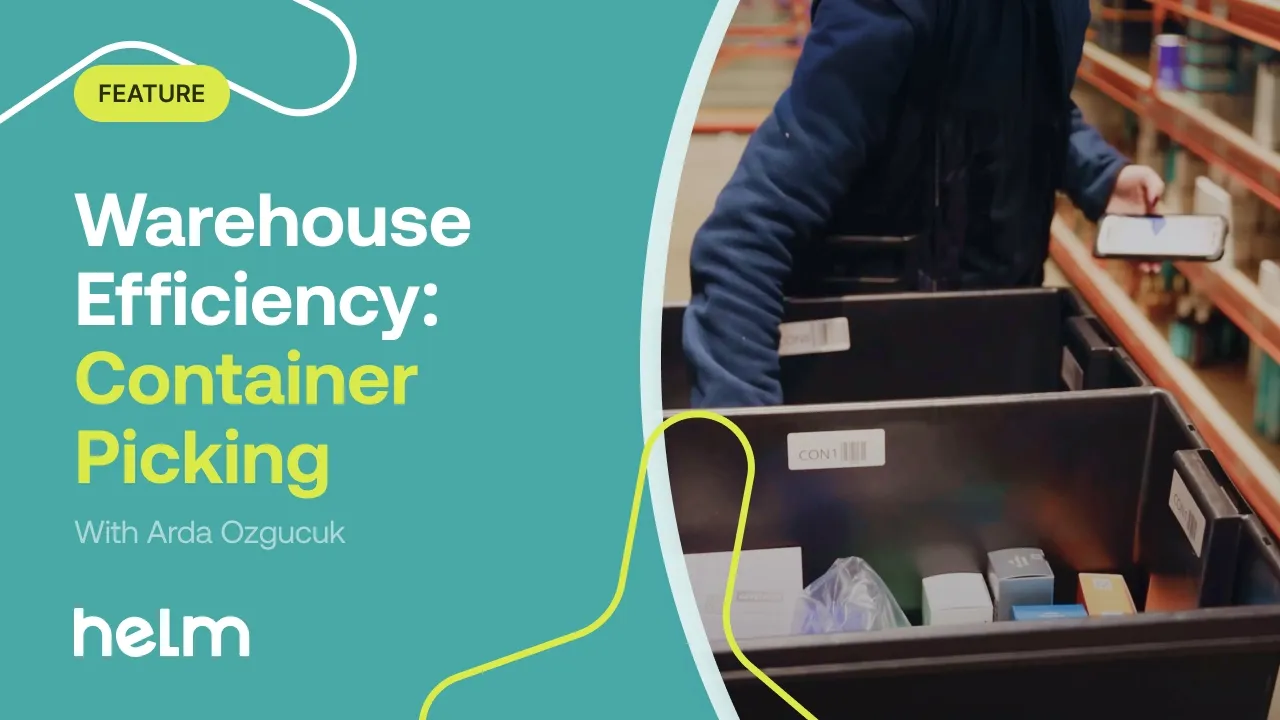
Container picking takes the batching principle further. Rather than working with a few orders at a time, container picking loads a trolley fitted with labelled containers and builds a pick wave of 25 to 30 orders, or more, into a single warehouse run. Items are scanned and placed directly into the assigned container for each order as the picker moves through the warehouse. The result is a single, continuous route through the pick zone that completes a large volume of orders in one pass.
This is a methodology Helm has developed and refined specifically for higher-volume beauty operations. Face the Future is the clearest illustration of it in practice: a trolley-based container system, orders grouped by item count to simplify packing, with location priorities ensuring the pick route is always efficient. At 700 to 2,000 orders per day, container picking is what makes that throughput achievable without a proportional headcount. Packing stations receive containers rather than a chaotic stream of individual baskets, which makes downstream processing more predictable and faster.
The Speed Terminal: Pick and Pack in One Step
For beauty brands with concentrated product ranges, where a significant proportion of orders contain one or two items from a small set of SKUs, the Speed Terminal is one of Helm's most impactful tools. Rather than separating picking and packing into sequential steps, the Speed Terminal combines them into a single station workflow.
Products are arranged around the terminal within easy reach. Orders appear on screen one at a time. The operative scans the item, which is instantly verified, and packs it directly. The label prints automatically. The next order loads. There is no separate pick run, no basket transfer, no packing queue. The entire fulfil cycle for a single-item order takes between two and fifteen seconds.
2bTanned and Isoclean both operate at high volume with concentrated SKU ranges, and both deploy Speed Terminals as their primary fulfilment method. For 2bTanned, this was the change that allowed them to reduce their team from over 50 staff to eight with no loss in throughput. For Isoclean, it delivered a ten-times improvement in picking speed. The model suits any beauty brand where a small number of SKUs account for a large proportion of daily order volume.
Digital Verification: Why Accuracy Is Non-Negotiable in Beauty
Beauty products present a unique verification challenge. Shades, formulations, and sizes are often packaged very similarly. A 30ml and a 50ml SPF product may look identical. A foundation in Warm Beige and one in Natural Beige can be almost indistinguishable under pressure. The consequence of a wrong shade reaching a customer is not just a return: it is a trust problem. For a brand that has invested in the quality of its product, packaging, and marketing, a fulfilment error at the pick stage undermines everything that precedes it.
Helm's digital verification enforces accuracy through mandatory barcode scanning at the point of pick. The picker cannot proceed to the next item or complete the order until the correct product has been scanned. An incorrect item triggers an immediate alert and blocks the workflow. There is no route to packing without verification.
Face the Future noted specifically that their product range, with similar shades and closely matched packaging, created a disproportionate mispick risk under their previous manual system, and that this was particularly acute for staff with colour perception differences. Helm's image-based on-screen guidance combined with enforced barcode scanning removed that risk entirely. Across all six beauty brands referenced in this piece, every significant improvement in order accuracy traces back to the same root cause: replacing visual judgement with enforced digital verification.
Packeye: Recording the Packing Process
For beauty brands, the packing station is where orders are assembled into the customer experience. It is also the last point at which an error can be caught before a parcel leaves the building. Helm's Packeye feature adds a layer of security at this stage that goes beyond standard barcode verification.
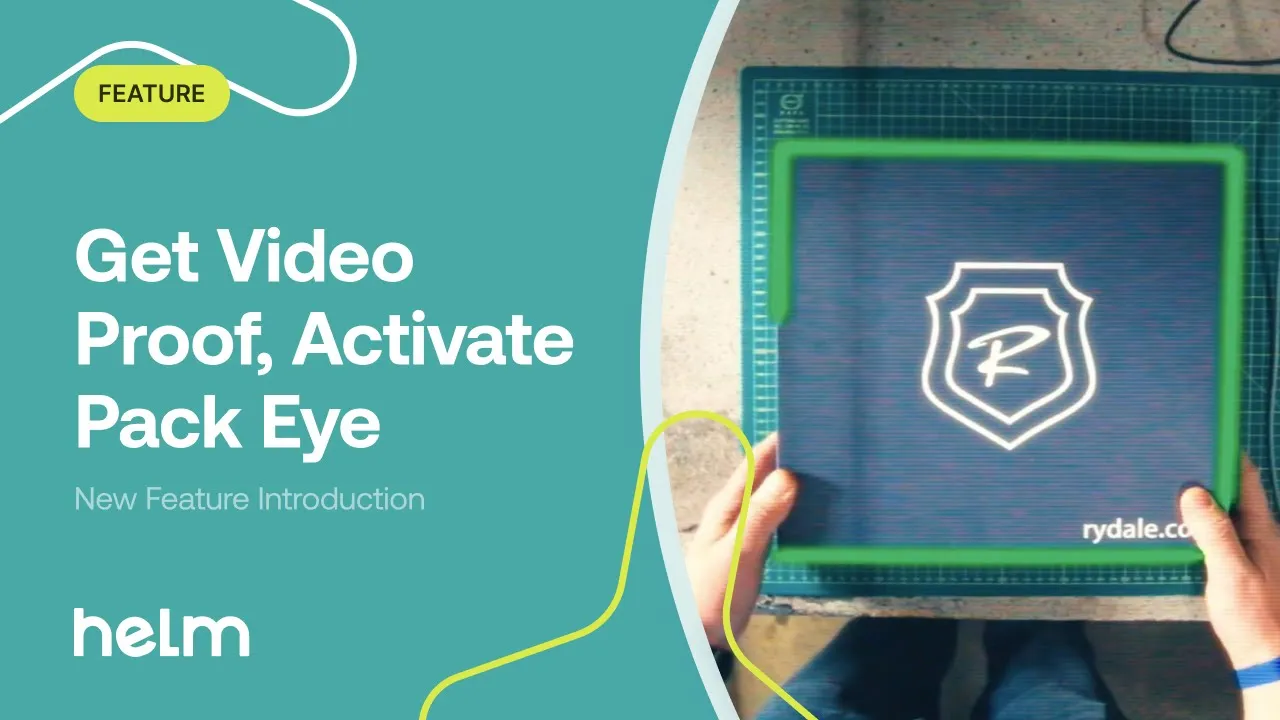
Packeye records the pick and pack process at the packing station through integrated camera capture. Every order packed is recorded, creating a visual log tied to that specific order. If a customer contacts the brand to report a missing item, incorrect product, or damaged goods, the brand has visual evidence of exactly what was packed and how.
For beauty brands, this is commercially significant in several ways. Returns fraud, where a customer claims an item was missing or incorrect, is a known risk in the sector, particularly for higher-value skincare and treatment products. Packeye provides the evidence base to handle those disputes accurately and fairly. It also creates accountability within the packing team, raising the standard of care at the station because operatives know the process is being recorded.
Beyond dispute resolution, Packeye gives operations managers visibility of packing station behaviour without needing to be physically present. For brands where the unboxing experience is part of the brand identity: tissue paper, inserts, branded tape, specific fold presentation, this matters. Patterns in how orders are handled, how quickly stations are moving, and whether packing presentation matches brand standards can all be reviewed remotely.
Post-Purchase Emails and Tracking Pages: Keeping the Brand Alive After Despatch
The moment a parcel leaves the warehouse is often where the brand experience dies. The customer receives a generic despatch notification from a carrier (DPD, Evri, Royal Mail) that has no visual connection to the brand they purchased from. The tracking page is carrier-branded. The communication is functional at best. For a beauty brand that has spent time and money on its visual identity, product presentation, and customer journey, this is a missed opportunity.
Helm's post-purchase tools allow beauty brands to own the communication after despatch. Tracking emails are designed and branded by the brand, carrying their colours, fonts, product imagery, and tone of voice. They are triggered automatically at the right moments in the delivery journey: despatch confirmation, out for delivery, delivered. The customer's experience of the brand does not end when the parcel is handed to the carrier.
Tracking pages follow the same principle. Rather than landing on a generic carrier portal, the customer is directed to a branded page that looks and feels like an extension of the brand's website. It can carry product recommendations, loyalty messaging, social links, or anything else the brand wants to put in front of a customer who has just bought and is in a high-engagement moment.
For beauty brands building repeat purchase behaviour, which is a core commercial objective for most skincare, tanning, and cosmetics businesses, the post-purchase window is one of the highest-value touchpoints available. Generic carrier communications waste it. Branded tracking emails and pages turn it into a retention moment.
Returns: Making It Easy When the Shade Isn't Right
Returns in beauty are different from returns in most other product categories. The customer is not usually returning a faulty product: they may have ordered the wrong shade, received something that did not match the product image, or simply changed their mind. The return is an emotional moment as much as a logistical one, and how it is handled shapes whether that customer comes back.
A difficult returns process in beauty has a disproportionate effect on brand loyalty. If the customer has to email to request a return, wait for a label, fill in multiple forms, and then wait weeks for a refund, the friction is remembered. A smooth, self-service returns process, particularly for a brand category built on personal relationship and community, removes that friction and gives the customer a reason to stay.
Helm’s returns portal gives customers a straightforward, self-service route to initiating a return. They log the return reason, select the items they are sending back, and receive instructions. On the warehouse side, returned stock is received and inspected against the return record, with condition assessments logged and restocking or write-off decisions made within the system. Returns data feeds back into inventory levels in real time.
For beauty brands, the returns portal also provides useful data. Return reason tracking across product lines can surface quality or expectation-matching issues that are worth addressing in product description, imagery, or shade guidance. A high return rate on a specific shade variant might indicate that the online presentation is not accurately representing the product commercial intelligence that can directly improve conversion and reduce future return rates.
Building a Fulfilment Operation Your Brand Deserves
Every beauty brand in this piece started from a different place. Some were overwhelmed by mispicks. Some had outgrown a process built around one person. Some were scaling faster than their operation could follow. What they had in common was that their products and their customers deserved better than what they had.
A warehouse management system is not a back-office tool. For a beauty brand, it is the infrastructure that determines whether the experience you have built, from product formulation to packaging to marketing, actually reaches the customer intact. Pick accuracy, delivery communication, the returns process: these are all moments of truth that sit entirely within your fulfilment operation.
Helm was built by people who understand that. If you are at the point where your current process is limiting what your brand can do, we would like to talk. Explore how Helm works or get in touch with the team to discuss your operation.
Frequently Asked Questions
Do I need a WMS is I am still a small beauty brand?
If you are processing more than a few hundred orders a month and relying on memory, spreadsheets, or a single person to keep things accurate, a WMS will make an immediate difference. Helm works with brands at early stages of growth as well as established operations, and the onboarding is designed to get you up and running quickly without disrupting what is already working.
Can Helm handle batch and expiry tracking for regulated beauty products?
Yes. Batch and expiry management is a native part of Helm's picking workflow, not a bolt-on. Stock is received with batch numbers and expiry dates recorded at goods-in, and the system automatically applies first-expiry-first-out (FEFO) logic at the point of pick. No spreadsheets, no manual decisions.
What is a Speed Terminal and is it right for my operation?
A Speed Terminal is a combined pick-and-pack station where products are arranged within easy reach of the operative, orders load one at a time on screen, and the label prints automatically once the item is scanned and verified. It is best suited to brands where a small number of SKUs account for a large proportion of daily order volume. If that sounds like your operation, it is worth a conversation.
How does Helm reduce mispicks in beauty fulfilment?
Through mandatory barcode scanning at the point of pick. An operative cannot proceed to the next item or complete an order until the correct product has been scanned. On-screen product imagery provides a visual reference alongside the scan requirement, which is particularly useful for ranges with similar shades or closely matched packaging. Across every beauty brand we work with, this single change has produced the most significant improvement in order accuracy.
Can Helm support multi-channel beauty brands selling across Shopify, TikTok Shop and marketplaces?
Yes. Helm integrates with the major eCommerce platforms and marketplaces, consolidating orders from all channels into a single fulfilment workflow. Channel-specific routing rules can be applied to ensure the right carrier, packaging, and process is used for each order type regardless of where the sale originated.
What does the post-purchase experience look like for customers of brands using Helm?
Rather than receiving a generic carrier notification, customers receive branded tracking emails at key delivery milestones, and are directed to a branded tracking page rather than a carrier portal. Both are designed and controlled by the brand. For beauty brands focused on repeat purchase and community, the post-purchase window is a retention opportunity, not just a logistics update.
How long does it take to get up and running with Helm?
It depends on the complexity of your operation, but most brands are live and processing orders within a matter of weeks. The onboarding team works alongside you through setup, and ongoing support is included as standard, with no additional cost for support queries.
Ready to See What Helm Can Do For Your Operation?
Whether you are starting out or scaling up, Helm gives beauty brands the fulfilment infrastructure to match the standard of their product.